Emergency Management Services
Treaty 8 Sovereign Nations Emergency Management Services are committed to enhancing community safety and security by focusing on four key areas:
- Mitigation and Prevention
- Preparedness
- Response
- Recovery
We are dedicated to building a safer, more secure future for Treaty 8 Nations through comprehensive emergency management strategies developed alongside the Treaty 8 Alberta First Nations.
The Emergency Management Coordinator provides high-level project coordination, develops culturally safe and sustainable disaster response resources, and fosters strong partnerships with governments, communities, external agencies, and organizations to ensure readiness and resilience for Treaty 8 Sovereign Nations.
Health Co-Management
Since 1986 there have been concerns about non-insured benefits for First Nations in Canada. So Health Canada committed to the Treasury Board of Canada to put in place organizational and management processes to improve the control and expenditures and reduce the rate of growth in benefit costs. There was a Non-Insured Health Benefits paper affirming the Elders and Chiefs of Treaties 6, 7, and 8 in Alberta, have always taken the position that comprehensive health care is a Treaty obligation of the Federal Government. This obligation arises out of the spirit and intent, as well as, out of the specific promises made during the negotiations of Treaties 6, 7 and 8. The Treaties are entrenched in the Constitution of Canada and are enforceable in the courts. Further, they indicated the cuts to Non-Insured Health Benefits which the Ministry of Health was planning to make, was a clear violation of Section 35 of the Constitution.
Fast forward to 1996, 10 years later, Health Co-Management (HCoM) was formed to be a proactive mechanism to address health issues for First Nations in Alberta. The main goal for Co-Management is to increase of First Nations in assessing, planning and management programs and services that are funded or offered by Health Canada. Back then it was previously with the Medical Services Branch (MSB), then named First Nation and Inuit Health Branch (FNIHB), and recently changed to Indigenous Services Canada (ISC).
In 1999, the Health Co-Management Secretariat was formed and was housed at Yellowhead Tribal Council. In 2017, the Health Co-Management Secretariat moved to Treaty 8 Sovereign Nations. As of October 2024, it is now at Blackfoot Confederacy.
On June 11, 2019, 10 years later, the Assembly of Treaty Chiefs (AoTC), a motion was brought forward. It was Moved that the Health Co-Management (HCoM) Agreement be renegotiated that a Chiefs Task Force be established with appointments from Treaty 6, Treaty and Treaty 8 (Alberta). As well, that it was unanimously agreed that there needed to be a unique partnership table between First Nations and Indigenous Services Canada (ISC) Alberta with a solid governance structure.
In the Health Co-Management Agreement, the Chiefs & Health Canada agreed to the following:
- Co-manage the Alberta Regional Funding Envelope
- Re-allocate funding efficiencies towards health programs in Treaty 6, Treaty 7 and Treaty 8
- Increase the participation of First Nations in assessing, analyzing, planning and managing programs and services funding/offered by Indigenous Services Canada (ISC) – Alberta Region
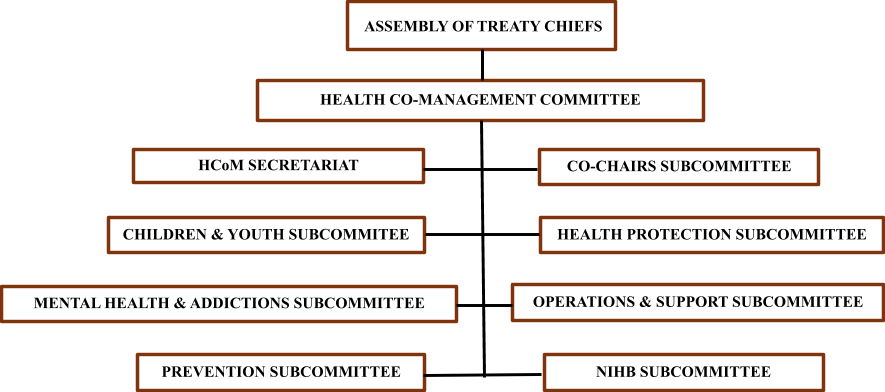
The Health Co-Management Committee and Sub-Committee’s is made up of a Representative Chief from each Treaty area from Treaty 6, Treaty 7 and Treaty 8, Yellowhead Tribal Council, a Director from FNIHB-AB Region, and Health Canada. Representatives from First Nation communities throughout Alberta, as well as, Indigenous Services Canada Representatives sit on all Subcommittee’s.
Lynn Muskwa is the HCoM Administrative Assistant at Treaty 8 Health Authority and Debra Loyie is the HCoM Health Secretariat Executive Coordinator at Blackfoot Confederacy.
Treaty 8 Water Council
Background
In 2020, First Nations in the Treaty 8 region raised concerns about water and wastewater issues. The exploration of a First Nation Water and Wastewater governance structure was initiated in response to these concerns with a focus on designing First Nation solutions for delivering water and wastewater projects, protecting treaty rights to water and source water, and providing sustainable wastewater treatment. A governance structure can take many forms, including using Indigenous Knowledge in management approaches, developing partnerships to address water quality or quantity issues, and developing legislation, standards of practice, recommend funding, and training.
Project Team
The project team consists of a Project Coordinator (Daryl Auger) from Treaty 8 Sovereign Nations, supported by a steering committee made up of designated First Nation representatives with expertise in water and wastewater planning, governance, Treaty Rights, and water source protection.
The team also includes:
- First Nation Water Management Specialists/Technicians with specialized knowledge in water management in a Treaty 8 context
- Elders/Knowledge Keepers from Treaty 8 First Nations
- Youth representatives from Treaty 8 are involved, bringing fresh perspectives on water and wastewater management.
Milestones
Project Milestone 1
A call for committee members was issued in January 2024, followed by a selection process. The first meeting of the Water & Wastewater Steering Committee took place on March 21, 2024, when T8 FNA hosted a WaterSummit.
Project Milestone 2
In 2024, the Water & Wastewater Steering Committee developed a Terms of Reference (TOR), and Request for proposals (RFP) then selected an engineering company to conduct the study. The group has met five times throughout the year to guide the project forward.
Project Milestone 3
Several committee members attended meetings in Toronto to shared their perspectives on the water and wastewater management responsibilities.
Next Steps
The future phases of this project involves a thorough examination. Some of these actions are listed below.
- Launch an engagement process to gather valuable input from community members on asset mapping and assessment.
- Perform an in-depth evaluation of the costs involved in maintaining and replacing aging water and wastewater assets to inform long-term planning and strategy.
- Create a sustainable, 10-year water and wastewater management plan.
Together, these steps will ensure the future resilience of our water and Nations.
Indigenous Early Learning and Child Care (IELCC)
In 2017, the Government of Canada committed to investing $1.02 billion over 10 years in First Nations Early Learning and Child Care to support strategic investments in First Nations identified priorities for ELCC programs, services, governance, and more. At that time, the First Nations Early Learning and Child Care (IELCC) Framework was developed and supported by the Assembly of First Nations (AFN). Since then, the Government of Canada has reaffirmed its commitment to IELCC and now provides permanent funding with no expiration date.
In 2019, Members of the Treaty 8 IELCC (Head Start and Day Care) programs gathered in Edmonton to discuss and identify priorities. These included options for IELCC staff training and certification, program licensing, a culturally appropriate curriculum framework, and the development of a network where Treaty 8 IELCC could come together for support, information sharing, and resource exchange.
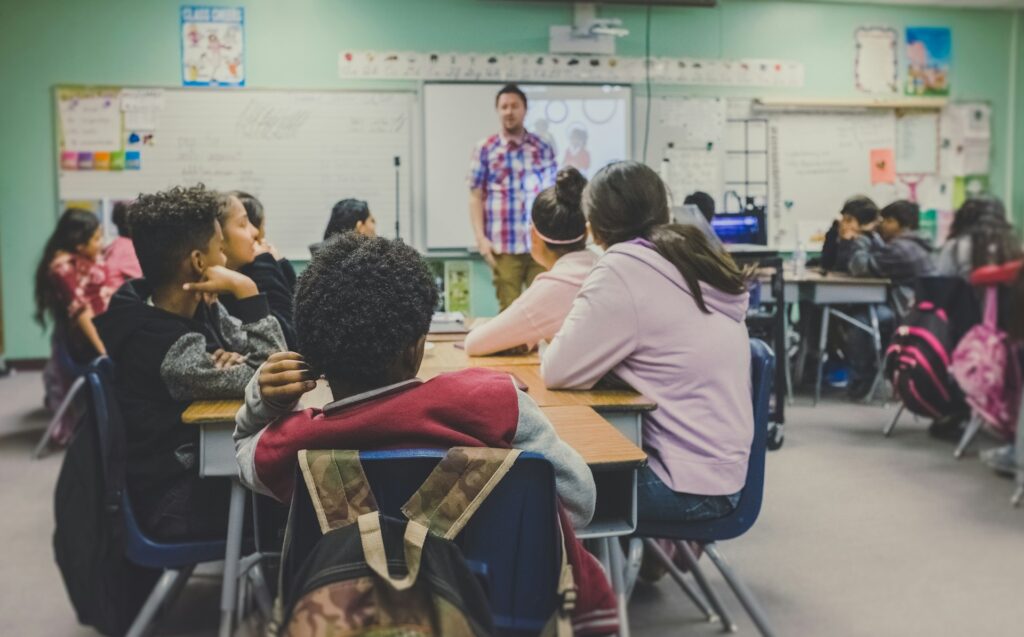
The IELCC Coordinator works under the Treaty 8 Health Authority to provide direct support to all Treaty 8 Nation Head Starts and Day Cares. Those supports include:
A partnership between NorQuest College and Treaty 8 to provide training for the Early Learning and Child Care Level 1, Certificate and Diploma. The goal of this partnership is to ensure IELCC staff currently working in the Treaty 8 Head Starts and Day Cares have access to training where they can remain in their current job positions, are taught a curriculum that is rooted in Treaty 8 culture and traditions, and the instructors visit the students on a regular basis. This program has been highly successful and recognized as one of a kind in Alberta.
Training options and an annual gathering are offered to ensure all IELCC staff receive up-to-date information and have the opportunity to enhance their skills. These sessions have covered topics including developmentally appropriate practice, outdoor play, supporting children with complex needs, invitations to play, and storytelling. The IELCC Coordinator also provides targeted training to programs upon request.
The Treaty 8 IELCC Coordinator attends the National Expert Working Group (NEWG) on First Nations ELCC. The NEWG is an Assembly of First Nations (AFN) led table with one representative from each province and territory. Its purpose is to help create policies to support First Nations children in their early years. Currently, the NEWG is developing a First Nations Early Learning and Child Care Results Framework and Evaluation to support planning, tracking, and measuring program success. It reflects the goals of First Nations ELCC and outlines how to improve over time, using a series of indicators and outcomes. This tool will be instrumental in determining the next steps for IELCC in Treaty 8.
Moving forward, Treaty 8 IELCC will develop a governance structure to support Nations in establishing strong, high-quality IELCC programs. This will include a Treaty 8 accreditation process to ensure that all aspects of a developmentally appropriate environment that fosters the growth and well-being of young children are incorporated.